As enterprises across Canada increasingly rely on internet connectivity and robust cybersecurity where high-performance internet connection is no longer a luxury; it’s a necessity. A slow, unstable connection can disrupt operations, frustrate employees and damage your brand. This is where Dedicated Internet Access (DIA) comes in.
This comprehensive guide will help you understand what DIA is and compare the top dedicated internet access providers in Canada. Our goal is to equip you with the knowledge to choose the right solution for your business, if you’re a small startup or a large enterprise.
What is Dedicated Internet Access?
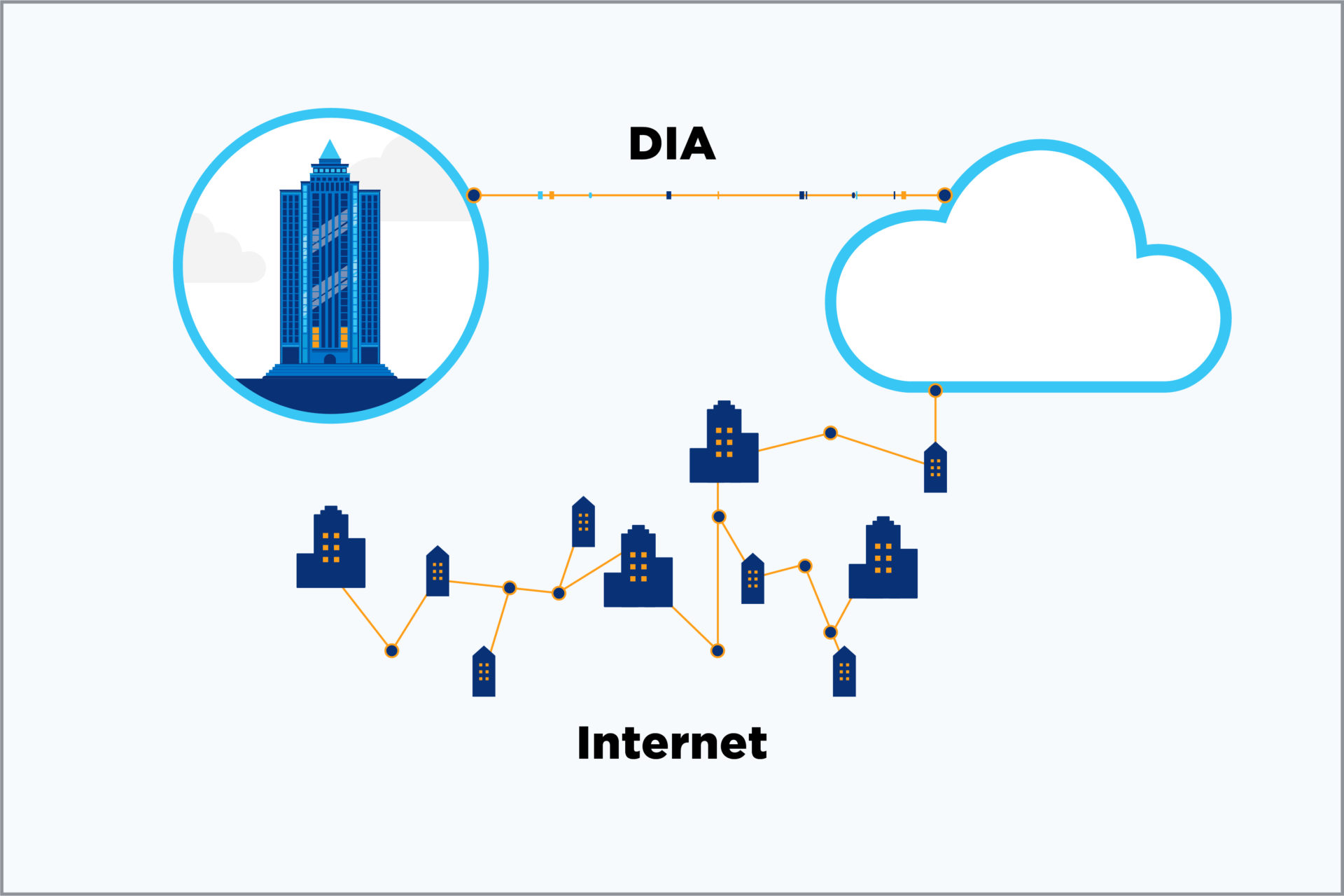
Dedicated Internet Access, also known as a leased line, is a private, unshared internet connection. It runs directly from the provider’s network to your business. Unlike traditional broadband, you don’t share bandwidth with other companies or residential users. This guarantees that the speeds you pay for are the speeds you get, all the time.
Key features of DIA include.
- Symmetrical Speeds: Your upload and download speeds are the same. This is vital for businesses that transfer large files, use cloud services, or rely on VoIP Phone System for business communications and video conferencing solutions for remote workforce
- Service Level Agreements (SLAs): DIA providers give you a contractually guaranteed level of service. This includes uptime, latency, and packet loss. If the provider doesn’t meet these metrics, you may get a service credit.
- Uncontended Connection: Your bandwidth is not shared. This eliminates slowdowns during busy hours.
What Is a DIA Network?
In telecom, DIA stands for Dedicated Internet Access. A DIA network is a circuit your provider runs straight from its network to your business, with the full bandwidth reserved for you. You will also hear it called DIA internet, a dedicated line, a dedicated fibre line or dedicated fibre internet.
In Canada, most DIA circuits are fibre lines that run from the carrier’s network to equipment in your building’s telecom room, and they come with a block of static IP addresses. If the carrier’s fibre already reaches your building (the building is “on-net”), installation can take a few weeks. If not, the carrier has to build a new line or reach you over another carrier’s network, which adds time and cost.
Common Uses for DIA
Software Development
Teams uploading and downloading massive codebases to cloud repositories with consistent speed.
Architecture & Engineering
Seamless collaboration on large CAD files and blueprints stored securely in the cloud.
Marketing Agencies
Uploading high-resolution video and image assets to clients instantly without bottlenecks.
Call Centers
Ensuring crystal-clear audio quality for hundreds of concurrent VoIP calls with zero jitter.
Data-heavy Operations
Running real-time analytics, financial trading platforms, or performing large-scale backups.
Why Choose a Dedicated Internet Access Provider?
Guaranteed Reliability and Uptime
An SLA-backed connection ensures your business stays online. This is vital for operations where every minute of downtime costs money.
Faster, Symmetrical Speeds
Fast uploads are just as crucial as downloads. This allows for faster collaboration, smoother video conferencing, and more efficient use of cloud-based applications.
Enhanced Security
DIA connections are more secure because they aren't on a public, shared network. Many providers also offer optional services like DDoS protection.
24/7 Enterprise-Level Support
When an issue comes up, you have direct access to a dedicated support team. They understand your business and work quickly to fix the problem, as outlined in your SLA.
Scalability
DIA plans are highly scalable. This allows you to easily increase your bandwidth as your business grows without needing a complete network overhaul.
a. Rogers Business
Overview: Rogers is a major Canadian telecommunications company with a vast fiber network. They are a leading provider of dedicated internet services, especially after buying Shaw which expanded their network.
- Uptime SLA: Guaranteed uptime of 99.9%.
- Tech Support: 24/7/365 dedicated business technical support.
- Redundancy: Options for wireless backup and extra connections to ensure maximum uptime.
Large enterprises and medium-sized businesses that need a high-performance, secure, and reliable connection for cloud applications, large-scale data transfer and multi-site connectivity.
- Top-tier network reliability and security.
- Extensive coverage especially in major cities.
- Strong reputation and a wide range of business solutions.
- Premium pricing compared to some regional providers.
- Installation might take longer for new fiber builds.
b. Bell Canada
Overview: Bell is another giant in telecommunications with a robust national network. They are well-known for their focus on fiber optic infrastructure and their diverse business services.
- Bell's dedicated internet offers scalable speeds. This ranges from basic DIA up to ultra-high-speed services in the 10 Gbps+ range.
- Uptime SLA: They offer strong SLAs, often with a 4-hour average repair time.
- Proactive Monitoring: Their network is monitored 24/7 to find and fix issues before they impact service.
- Network Performance Guarantees: SLAs cover performance metrics like latency, jitter and packet loss.
Enterprises and organizations that need a highly reliable connection for mission-critical applications and prefer a fully-managed solution.
- Extensive and reliable pure fiber network.
- Proven track record with large Canadian businesses.
- A full suite of managed IT services.
- Pricing can be complex and is often not public, so you need a custom quote.
- This may not be the most cost-effective option for smaller businesses.
c. TELUS
Overview: Serving Western Canada, TELUS is a leading provider of business internet and telecommunications. Their PureFibre network is known for its speed and reliability.
- TELUS offers a range of dedicated internet options. They utilize their fiber network to provide symmetrical speeds of up to 5 Gbps and higher in select regions.
- Symmetrical Speeds: A key feature of their PureFibre network by ensuring fast uploads for cloud and collaboration tools.
- Award-Winning Network: Their network has been recognized for its speed and reliability.
- Managed Services: They provide a fully managed service, which includes monitoring and a single point of contact for support.
Businesses in Western Canada that need a high-speed, reliable and managed fiber solution.
- Excellent reputation for network performance and customer service.
- Strong presence and deep network in British Columbia and Alberta.
- Focus on symmetrical speeds across most plans.
- Limited service area, mainly in Western Canada.
- Custom quotes are needed for most DIA plans, so pricing isn't transparent.

d. Cogeco Business
Overview: Cogeco Business serves parts of Ontario and Quebec with a strong fiber network. They are a strong regional player with a focus on delivering dedicated and scalable solutions.
- Cogeco offers dedicated fiber internet with speeds from 5 Mbps to over 10 Gbps. The plans are flexible and scalable.
- 100% Fiber Network: Cogeco owns its fiber network by providing a high-quality and uncontended connection.
- Local Support: They have dedicated local experts who know the unique needs of businesses in your area.
- Quality of Service Guarantee: Their service agreements ensure high-quality network performance with minimal delay.
This is a good option for businesses in Ontario and Quebec seeking a dependable local provider with personalized service and a wholly-owned fiber network.
- Strong regional expertise and customer focus.
- Competitive pricing for the service and scalability.
- Focus on a pure fiber-based delivery.
- Geographically limited to specific regions in Central and Eastern Canada.
- It may not have the same national-scale infrastructure as Bell or Rogers.

e. Beanfield Metroconnect
Overview: Beanfield is a Canadian telecommunications company that specializes in fiber-optic internet for businesses in Toronto, Montreal and Vancouver. They are known for their high-speed, symmetrical and community-focused approach.
- Beanfield offers dedicated Ethernet internet with symmetrical speeds of 1G, 10G and even 100G. They also have plans for dynamic needs.
- Best-in-Class SLA: They are known for having one of the strongest SLAs in the industry by ensuring uptime and performance.
- All-Fibre Network: Their entire network is 100% fiber-optic by providing minimal latency and maximum speed.
- Community-Focused: They use direct peering with other networks which provides a more efficient and reliable data path.
Businesses in major Canadian cities that demand the fastest possible speeds and the highest level of reliability and customer service.
- Exceptional symmetrical speeds and network performance.
- Known for excellent customer service and fast installation times.
- Simple and transparent plans and pricing.
- The service area is particularly concentrated in urban cores.
- This is not an option for businesses in rural or suburban areas.

How to Choose the Right DIA Provider for Your Business
- Assess Your Needs
- Speed: How many employees do you have? How much do you rely on cloud tools, video and large file transfers? A good rule of thumb is to factor in 10-20 Mbps of symmetrical bandwidth per heavy user.
- Budget: DIA is an investment. While it costs more than broadband, the returns from better productivity and reliability are often significant.
- Service Area: Does the provider have fiber access to your business location? Check their coverage map or contact them directly.
- Ask for SLA Guarantees: A strong SLA is the foundation of DIA. Please request a copy of their Service Level Agreement. Pay close attention to the promised uptime percentage, latency metrics and the guaranteed fix or response time.
- Consider Local Support and Installation Time: A local support team can be a significant advantage. Also, ask about the typical installation time. It can take a few weeks or several months, depending on whether a new fiber line is needed.
Dedicated Internet for Small Business vs. Enterprise
While the concept is the same, the use of DIA is different for businesses of various sizes.
Small Businesses
A growing small business with 10-50 employees that uses VoIP Solution and cloud software can benefit from an entry-level DIA plan (e.g., 100 Mbps to 500 Mbps). The guaranteed symmetrical speeds prevent slow video calls and file uploads that kill productivity.
Enterprises
Large enterprises with hundreds of employees and multiple locations need high-capacity, redundant DIA connections (1 Gbps+). Their needs focus on supporting a massive user base and complex applications. This ensures business continuity with minimal risk of downtime.
Enterprise Dedicated Internet Access (10 Gbps to 100 Gbps)
Most small and mid-sized businesses run DIA between 100 Mbps and 1 Gbps, and many large companies use 1 to 10 Gbps. Companies that move large volumes of data between sites, data centres and the cloud may need 40 Gbps, 100 Gbps or more.
Who Needs More Than 10 Gbps?
Growing and multi-site businesses. When head office, regional offices, plants and warehouses all reach central systems through one core connection, that connection carries every site’s traffic.
Companies integrating an acquisition. Merging two networks means moving applications, syncing data and linking sites that used to run separately. That often calls for extra capacity, private links or a second network path.
Heavy cloud users. If you run large workloads in Microsoft Azure, AWS or Google Cloud, your connection carries backups, storage and application traffic all day. For that traffic, a direct cloud connection is sometimes a better fit than a bigger internet circuit.
Businesses using an outside data centre. If your servers or storage sit in a third-party facility, your offices need a fast link to them for database replication, disaster recovery and large file transfers.
AI and analytics workloads. Teams that process large data sets or run jobs on rented cloud servers move a lot of data between sites. The circuit is only one part. Your switches, routers and storage also limit the speed you actually get.
Media, engineering and manufacturing. Video files, design models and production data are large, and teams pass them between sites and outside partners every day.
Not every company needs a 100 Gbps circuit. Size the circuit for the traffic you have now plus what you expect over the length of your contract.
Types of High-Capacity Connections
- Dedicated Internet Access (DIA): a dedicated internet circuit with an SLA, for traffic that goes to the internet and online services.
- Private Ethernet: a private link between your offices, facilities and data centres.
- Direct cloud connection: a private link from your network into Microsoft Azure, AWS or Google Cloud that doesn’t cross the public internet.
- Data centre interconnect: a link between your premises and the facility that hosts your applications, storage or disaster recovery.
- IP transit and wavelength services: IP transit is bulk internet capacity for companies that run their own routing (BGP). A wavelength is a private optical channel between two sites, often at 10 or 100 Gbps.
- Redundant connections: a second circuit, on a physically separate route where available, so one fibre cut doesn’t take you offline.
The right choice depends on your sites, how your traffic flows, your performance targets and which carriers reach your addresses. More bandwidth on its own won’t lower latency, add redundancy or fix slow applications. Circuits above 10 Gbps are mostly available in large cities and data centre buildings, so check what carriers can deliver at your address first. For current costs, see our DIA pricing guide.
How CanComCo Helps
A request for more bandwidth usually comes from a bigger change: growth, an acquisition, a new location or a consolidation project. We start there.
- Understand the goal. We ask what’s driving the project and what you need the network to do over the next few years.
- Define the requirements. We list bandwidth, locations, applications, data flows, backup, SLA and timeline. This shows whether you need DIA, private Ethernet, a data centre link, a cloud connection or a mix.
- Compare carriers and quotes. We find the carriers that serve your addresses, request quotes, and compare price, installation cost, contract term, SLA and technical options side by side.
- Cover the related pieces. If your project also needs data centre services, SD-WAN, firewall or DDoS protection, backup links or managed network services, we can quote those in the same process.
You don’t need to know which carrier serves your building or which circuit type you need before you contact us. Send us your addresses and what the network has to handle, and we’ll come back with the carriers that serve those addresses and what each one quotes.
Frequently Asked Questions
What is the difference between broadband and dedicated internet access?
Broadband is a shared connection with asymmetrical speeds and no performance guarantees. DIA is a private, unshared connection with symmetrical speeds and a guaranteed Service Level Agreement (SLA).
Is DIA worth it for small businesses?
Yes, for small businesses that depend on real-time collaboration, cloud software, and reliable communication, DIA is a significant investment. The money saved from avoiding downtime and improving productivity is often much greater than the higher monthly fee.
What are typical SLA terms from DIA providers?
Typical SLA terms include a guaranteed uptime of 99.9% or higher. They also include metrics for latency (ping time), packet loss, and jitter. They also specify a timeframe for technical support to respond and fix issues.
How much does dedicated internet access cost?
The cost changes based on speed, location, and provider. Although it costs more than residential plans, prices have decreased. Most plans are custom-quoted. An entry-level DIA for a small business may start at a few hundred dollars per month. At the same time, an enterprise-level service can cost thousands.
Can I get DIA in rural areas?
DIA is usually delivered via a fiber-optic connection, which is more common in cities and suburbs. While fiber is expanding, it can be challenging to obtain DIA in rural areas without incurring significant upfront construction costs.
How long does installation take?
Installation time can vary. If your building is already on-net (meaning it’s already connected to the provider’s fiber) where it could take a few weeks.
Where can I get reliable business internet with a guaranteed uptime SLA?
From a provider that sells dedicated internet access (DIA). A DIA contract includes an SLA that sets uptime (usually 99.9% to 99.99%), latency and repair time. If the provider misses those targets, the contract may give you a service credit, which you often have to request yourself. In Canada, Bell, TELUS, Cogeco and Beanfield sell DIA with SLAs, and availability depends on your address. CanComCo gets quotes from the providers that serve your building and compares the SLA terms side by side.
Which business internet plans include a dedicated connection rather than shared bandwidth?
Dedicated internet access (DIA) plans. Standard business internet plans share bandwidth with other customers in your area, even when the advertised speed looks the same. A DIA plan reserves the full speed for your business in both directions and comes with an SLA. Providers also sell it as dedicated internet, dedicated fibre or Ethernet internet. Expect a higher monthly price and a longer installation than broadband. Our DIA pricing guide lists typical costs.
What business internet plans work best for video conferencing and cloud tools?
Plans with fast upload speed and steady performance at busy times, which usually means a dedicated internet access (DIA) plan. Video calls send about as much data as they receive, and cloud tools upload files and sync data all day, so upload speed matters as much as download. DIA gives you symmetrical speeds, and its SLA usually covers latency, often with jitter and packet loss as well. As a rule of thumb, plan for 10 to 20 Mbps of symmetrical bandwidth per heavy user, so an office with 25 heavy users needs about 250 to 500 Mbps.
What speeds are typical for enterprise internet connections?
Most mid-sized businesses run DIA between 100 Mbps and 1 Gbps. Larger companies and multi-site networks often use 1 to 10 Gbps, and some need 40 or 100 Gbps for data centres, cloud workloads and traffic between sites. See the enterprise section above for who needs more than 10 Gbps.
Which business internet providers in Canada offer the fastest speeds?
For dedicated internet, Beanfield sells symmetrical 1, 10 and 100 Gbps in Toronto, Montreal and Vancouver. Bell and Cogeco sell DIA at 10 Gbps and above, and TELUS sells symmetrical fibre at 5 Gbps and higher in parts of Western Canada. On a DIA plan, upload is as fast as download. The top speed you can get depends on which carriers have fibre at your address, and CanComCo can check that for you.
Conclusion
Choosing a reliable and dedicated internet access provider in Canada is one of the most wise decisions you can make for your business’s connectivity and growth. Don’t settle for unpredictable performance and frustrating slowdowns. Take the first step toward a more reliable, productive and secure future. CanComCo is a group of expert telecom advisors helping businesses find the best SLAs for dedicated internet connection, as we have partnerships with multiple providers across Canada. Contact us today to book free advisory call with us today.